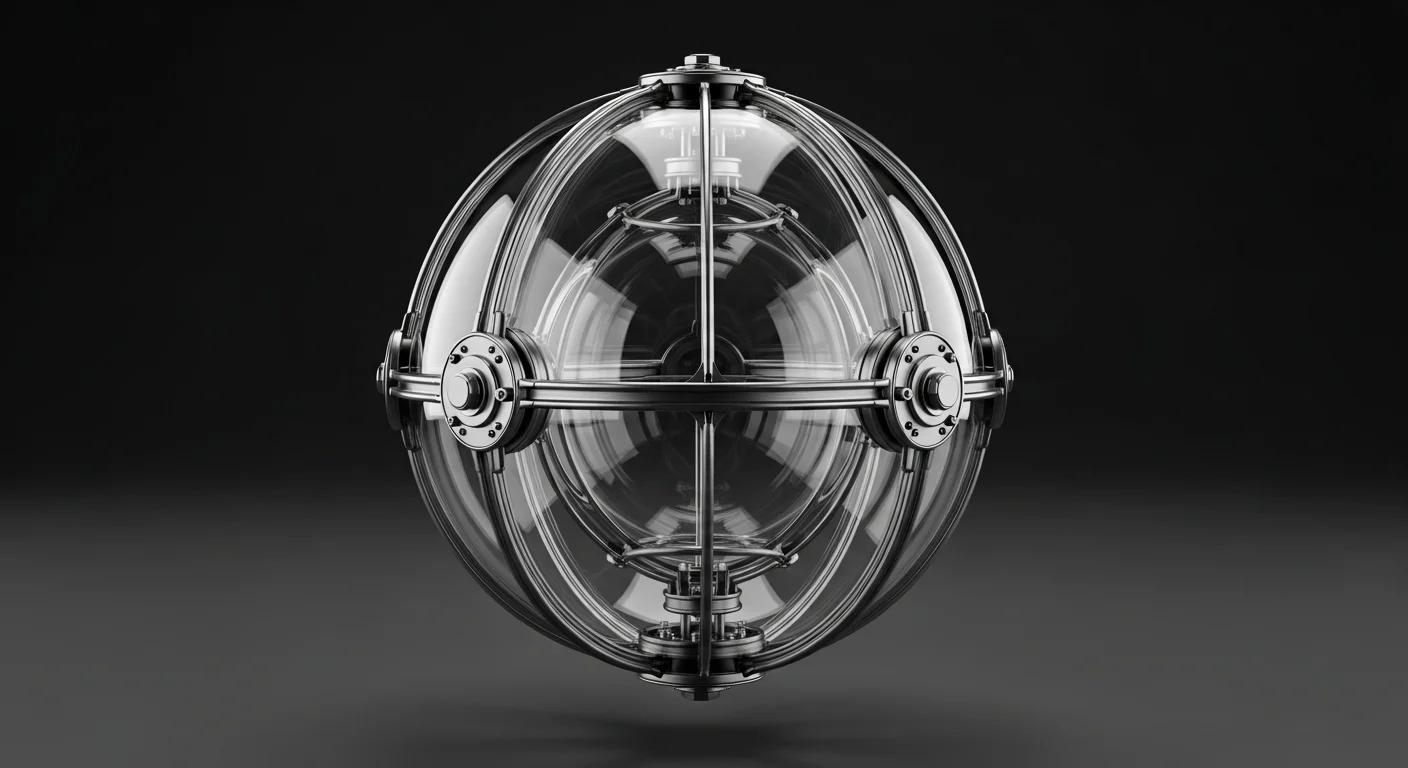
08 // Aero-Void Vacuum Buoyancy Research
The ultimate "lighter than air" gas is nothing. A rigid sphere containing a vacuum is 14% more buoyant than helium. Historically impossible because 14.7 psi atmospheric pressure would crush any shell light enough to float.
This is an active research program, not a product line. The core challenge is fabricating a shell that is simultaneously strong enough to resist atmospheric crushing, light enough to achieve net buoyancy, and tolerant of manufacturing defects and puncture. Current materials cannot do this.
The candidate shell is a Metallic Sciences graphene-aerogel honeycomb composite. The load-to-mass ratio is theoretically sufficient, but real-world fabrication introduces seams, stress concentrations, and defect sites that reduce compressive strength below the threshold. Vacuum buoyancy is a long-horizon structural-vacuum platform dependent on breakthroughs in ultra-light compressive shell materials and defect-tolerant geometry.
Shell buckling tolerance under real atmospheric conditions. Puncture resistance. Dynamic stability in turbulent air. Manufacturing repeatability at scale. Weather and thermal cycling effects on structural integrity. Any commercialization is contingent on solving the shell problem first.