09 // Cold Heart Cryogenic Architecture
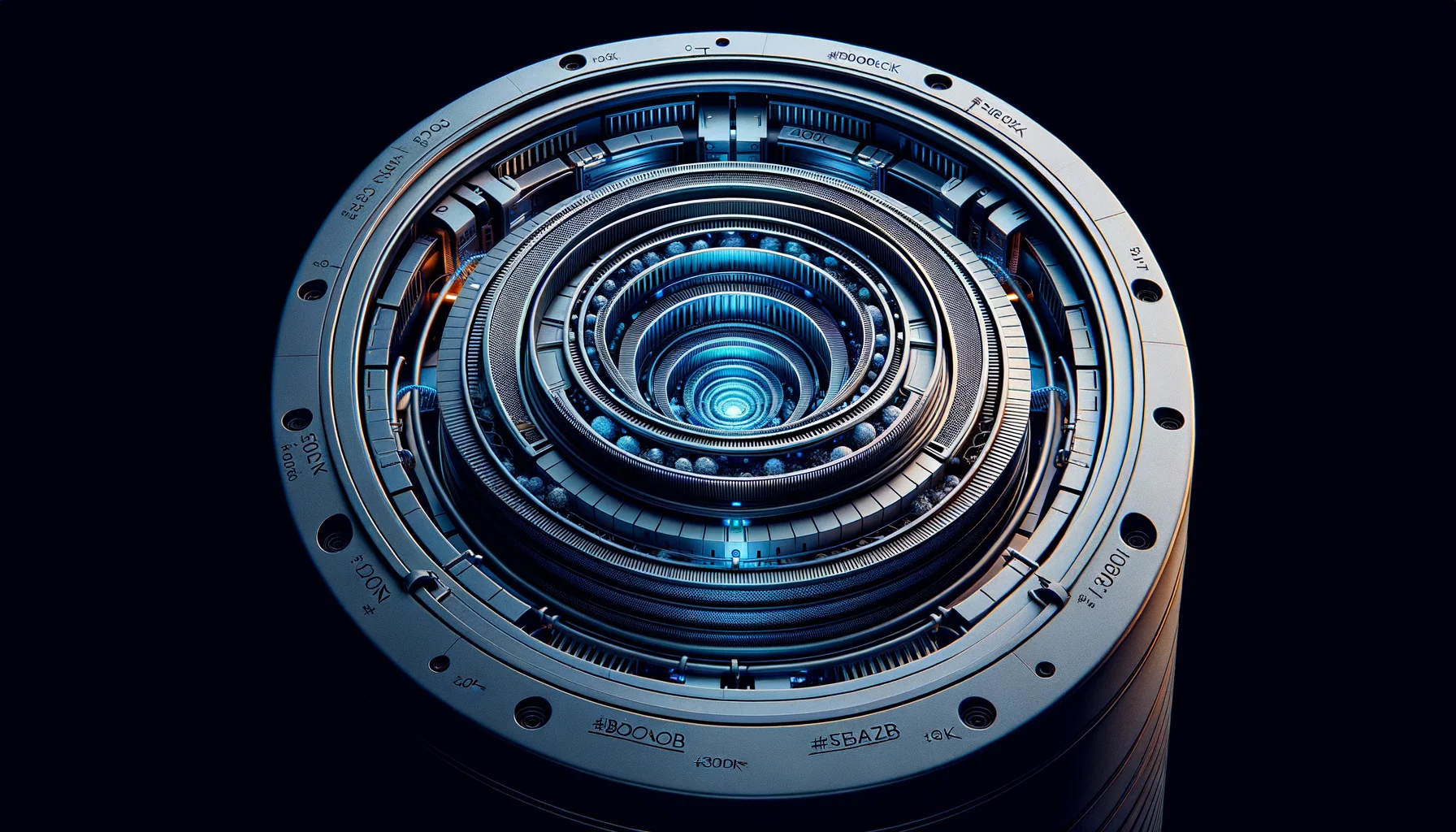
Many of our highest-vacuum applications require cryogenic temperatures. Thermal noise is the enemy. For quantum-limited measurements, the only fluctuations in the box should be quantum fluctuations.
Standard Helium-4 hits a cooling wall at ~1 K (becomes a superfluid, vapor pressure drops to zero). Helium-3 is a fermion — atoms repel each other via Pauli Exclusion. In a dilution refrigerator, He-3 atoms cross the boundary from a concentrated layer into dilute He-3 dissolved in superfluid He-4. This is endothermic even at absolute zero. He-4 gets you to space temperature (3 K). He-3 gets you to quantum temperature (0.010 K).
STAGE 1 — Pulse Tube: 300 K → 4 K
STAGE 2 — He-3 Dilution: 4 K → 10 mK
STAGE 3 — Nuclear Demagnetization (optional): 10 mK → 100 µK
Stage 3 uses copper plates in a Gatling-gun sequence — four units rotating through cool/discharge/magnetize/standby. Increases complexity substantially but reaches temperatures 100× colder. For most vacuum metrology applications, Stage 2 is sufficient.
Laser cooling reaches nanokelvins — billions of times colder than space. But it only works on gases and individual atoms. You cannot laser-cool a solid substrate. The systems we build need a continuous refrigerator for bulk hardware, not a technique limited to trapped atom clouds.